The second post in a series of community engagement sessions for the future of the Andrews Ave Community Center and Old Jail
📋 Share your input on the future of this building: SURVEY HERE
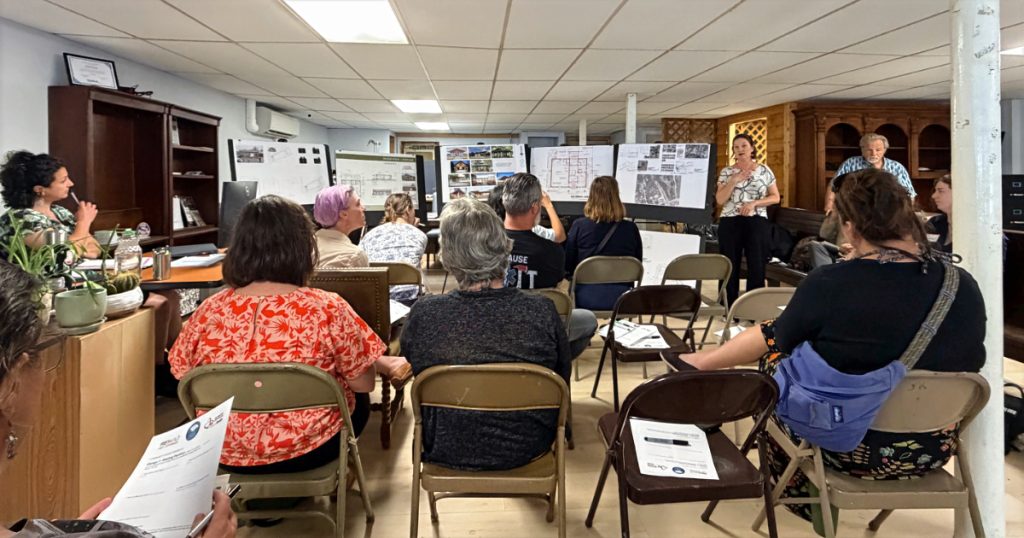
On May 21st, the Town of Hot Springs and Rebuild Hot Springs Area (RHSA) partnered with MountainTrue’s Appalachian Design Center (ADC) to host the second community engagement session for one of downtown’s most storied properties — the Andrews Ave Community Center and Old Jail. If you weren’t able to make it, here’s what you missed and how you can still weigh in.
A Quick Recap: How We Got Here
Back on March 19th, the community gathered for the first public forum to share memories of the Community Center and ideas for its future. That conversation surfaced four clear priorities: a welcoming gathering place for families and all ages, support for local creatives and small businesses, preservation of community identity and history, and flexible space that can serve a wide range of needs. (You can read a full recap of that first meeting on our website.)
The ADC design team took all of that input back to the drawing board — literally. They also sent out a community survey, which is still open and still needs your response. What came back were four distinct conceptual designs, each tackling the same set of challenges from a different angle.
The Challenge Every Design Had to Reckon With
Before walking through the concepts, it helps to understand the constraints every designer was working within.
Flood resilience is the big one. State regulations require that any renovated or rebuilt structure in the floodplain have its finished floor elevated above the base flood elevation — roughly 2 to 2.5 feet above where we’re currently standing in that building, with design guidelines pushing even higher. During Helene, water stains on the walls inside reached about 3 feet. The state is also in the process of recalibrating what a “100-year flood” actually means as the region experiences more frequent and severe events — so designing conservatively is the smart call.
ADA accessibility is equally non-negotiable. For every inch of floor elevation added, a corresponding length of accessible ramp is required. Raising a floor 36 inches means a 36-foot-long ramp — and code limits any single ramp run to 30 feet before requiring a landing. That makes accessibility infrastructure a significant design and cost factor.
Structural integrity is an open question. The old stone walls have character and history, but their condition will need professional assessment before any path forward is finalized.
Financial sustainability was a theme that came up repeatedly in the first session and ran through every design — how does whatever gets built here sustain itself over time?
With all of that in mind, here are the four concepts the design team brought forward.
Concept 1: The Healing Pavilion
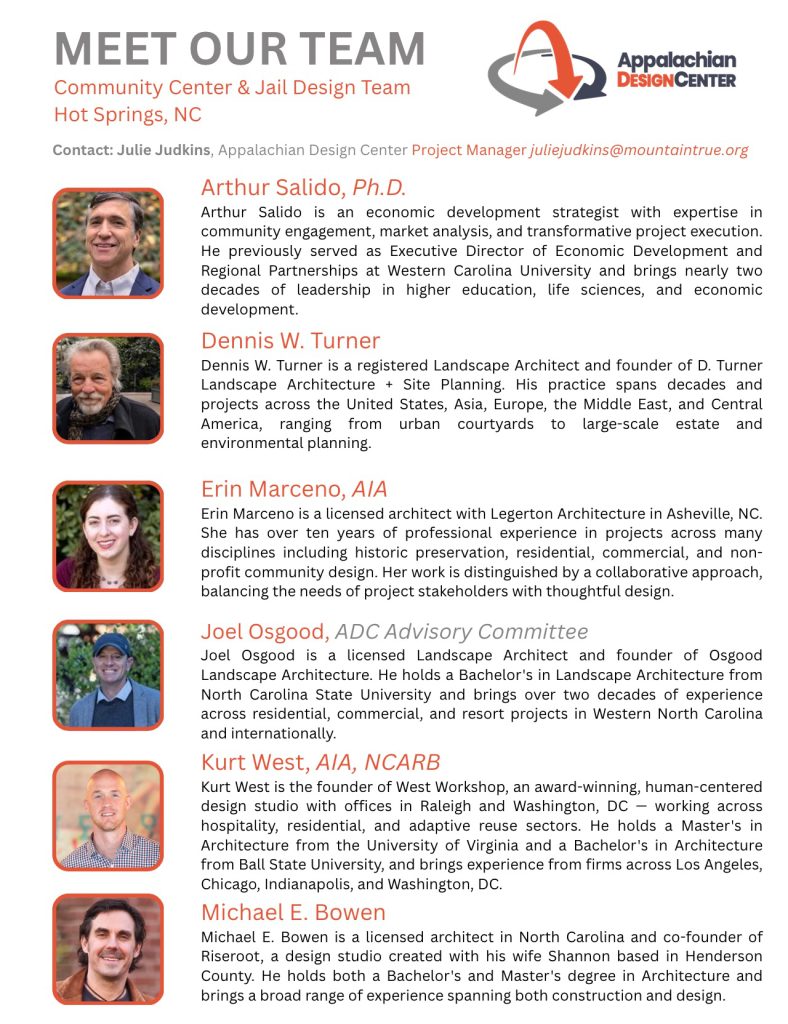
Presented by Michael Bowen, Riseroot Architecture and Design
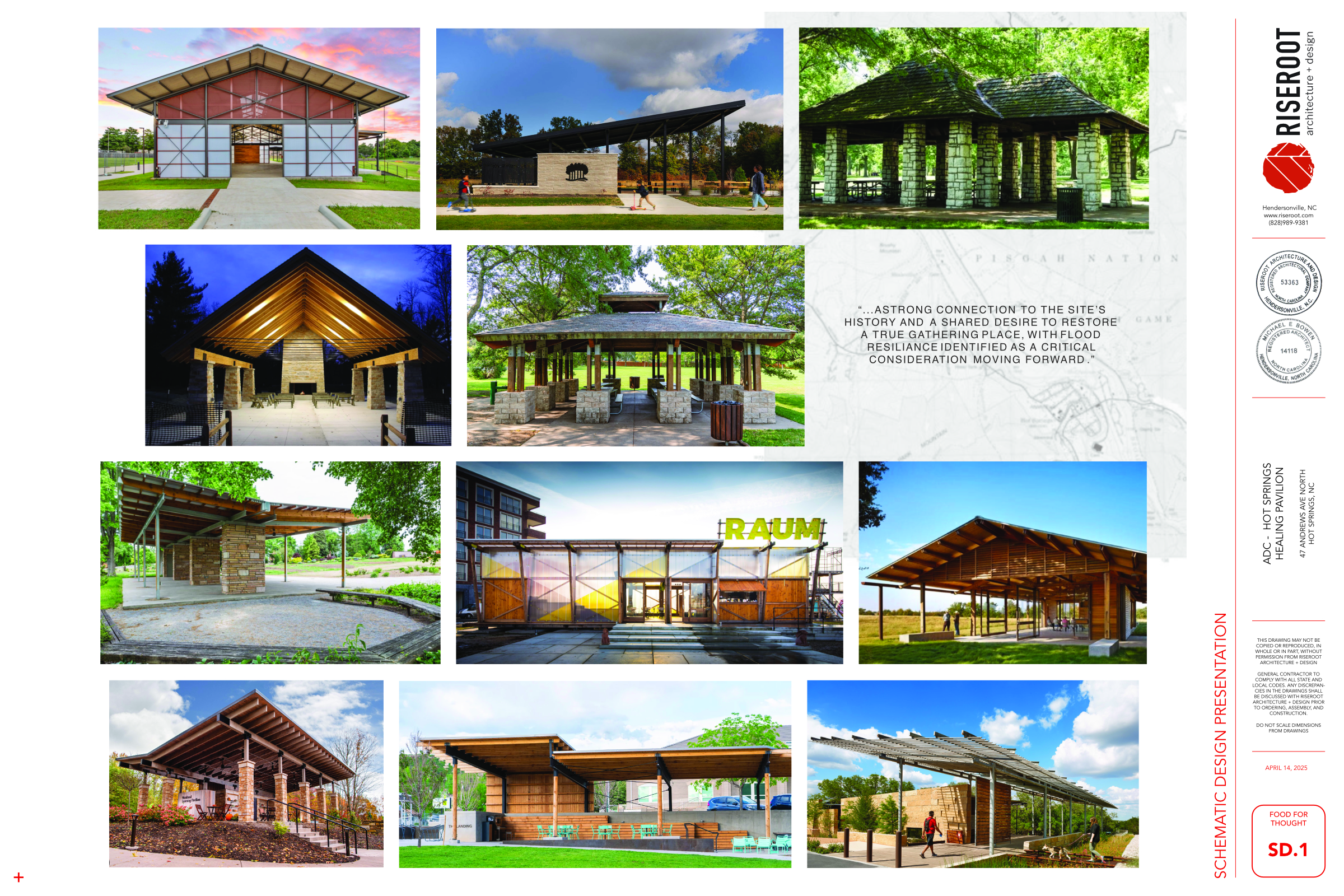
Michael Bowen came in at what he called the “utilitarian end of the spectrum.” His proposal: take the building down, salvage as much of the original stone as possible, and construct an open-air pavilion in its place.
The concept is named with intention. Hot Springs has a long history as a place of healing — the hot springs themselves were sought out for that purpose for generations. Rebuilding from the ground up, using the original stone as the foundation material, honors that history while creating something that doesn’t have to fight the flood. An open-air structure doesn’t need to be flood-resilient in the traditional sense — water comes in and drains out without causing the kind of damage a closed building would suffer.
The footprint would use the full 3,000 square feet of the current building (roughly 50 by 60 feet). Michael envisions polycarbonate sliding doors that could open the space completely or close it off for shoulder-season use with supplemental heat. Permanent restroom facilities would be located off the back. Storage could be tucked along one side.
Financially, the pavilion model has legs: spaces like this get rented out for farmers markets, private events, and community gatherings. Michael referenced Jackson Park in Hendersonville, where pavilions rent for $40–$50 for four-hour blocks.
This is the most stripped-down, lowest-cost concept of the four — and deliberately so. As Michael put it, the goal is simplicity: a place the community can flow in and out of, not structured for any single permanent use.
Concept 2: A Renovated Community Hub with Greenhouse and Outdoor Space
Presented by Dennis Turner, D. Turner Landscape Architecture
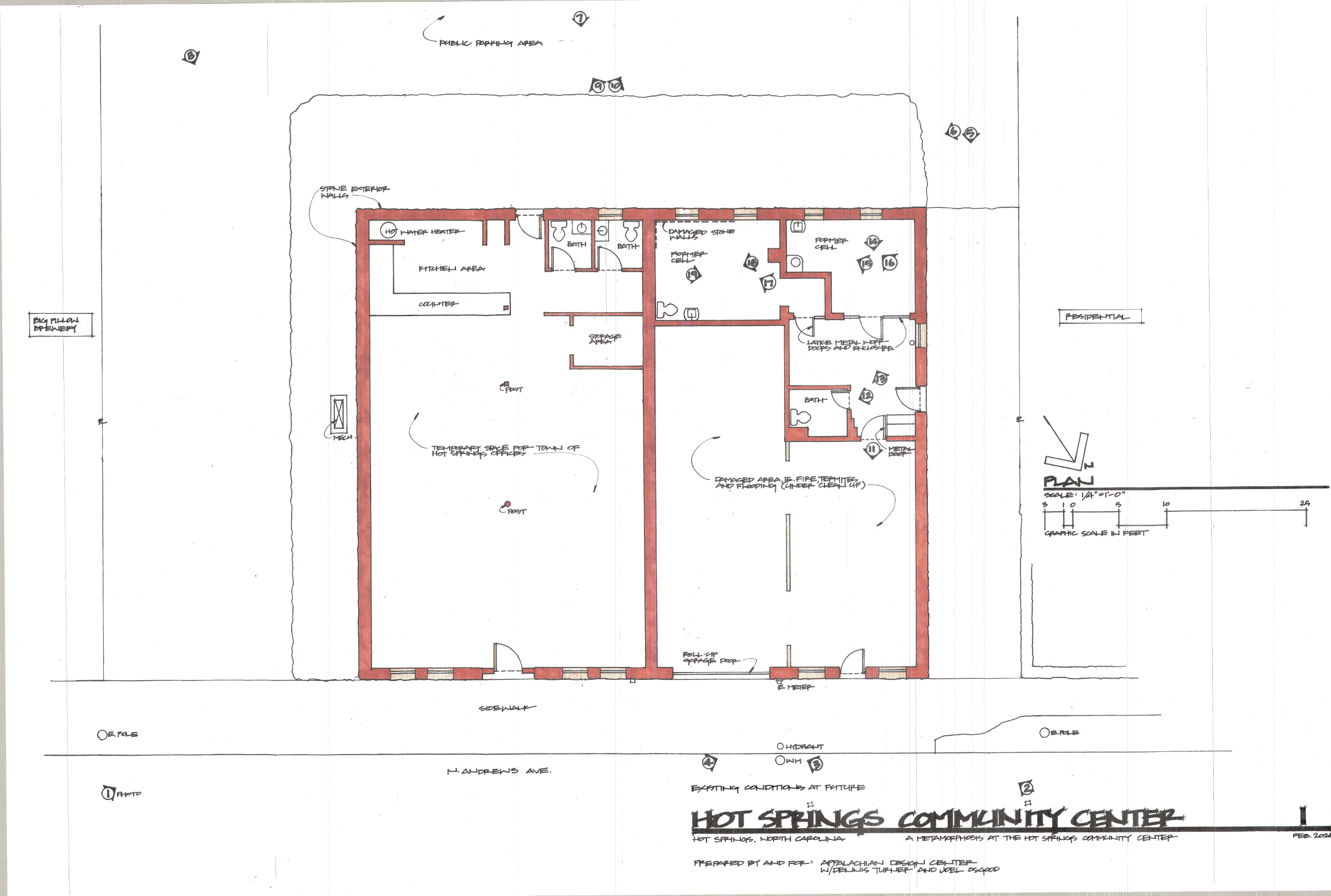
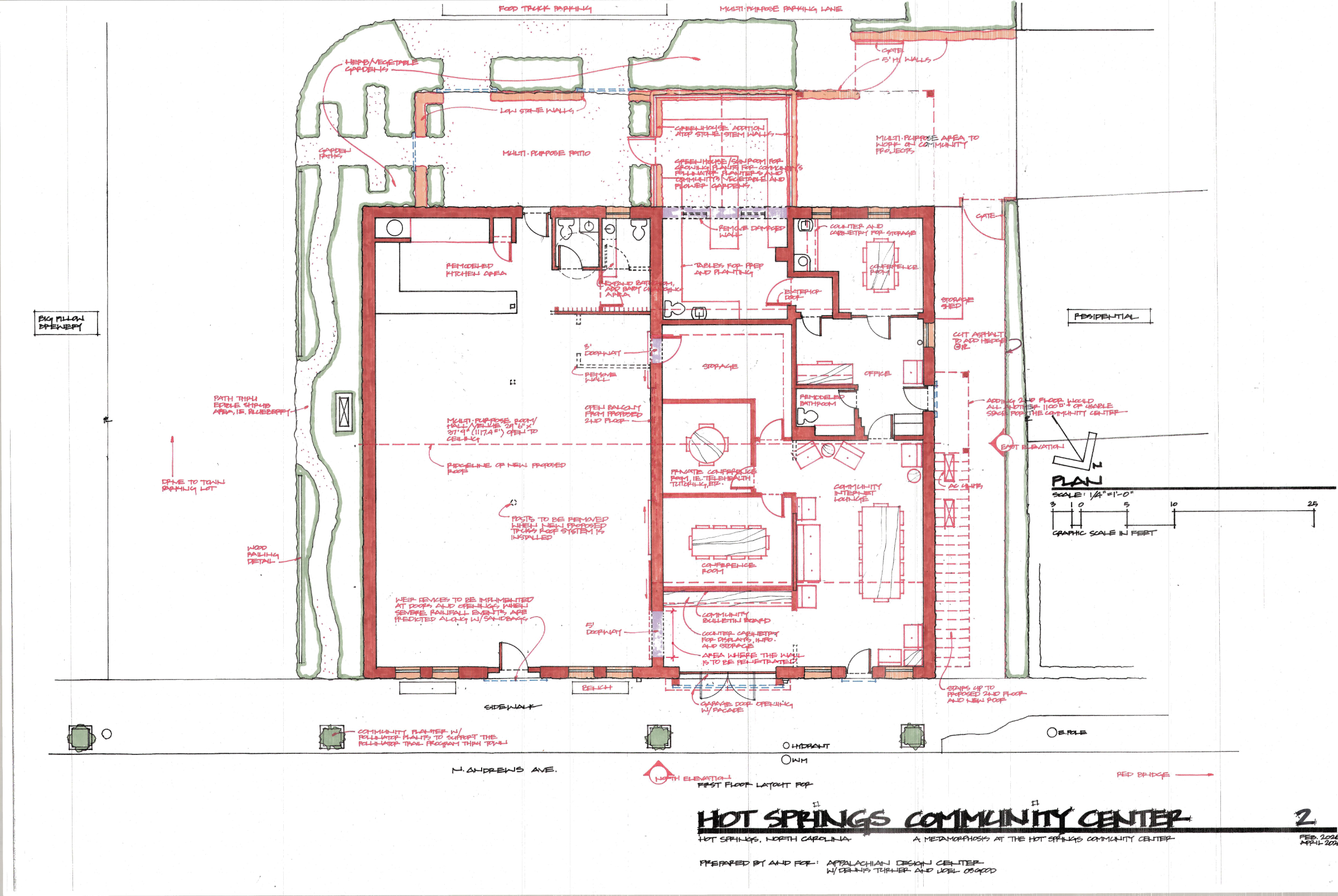
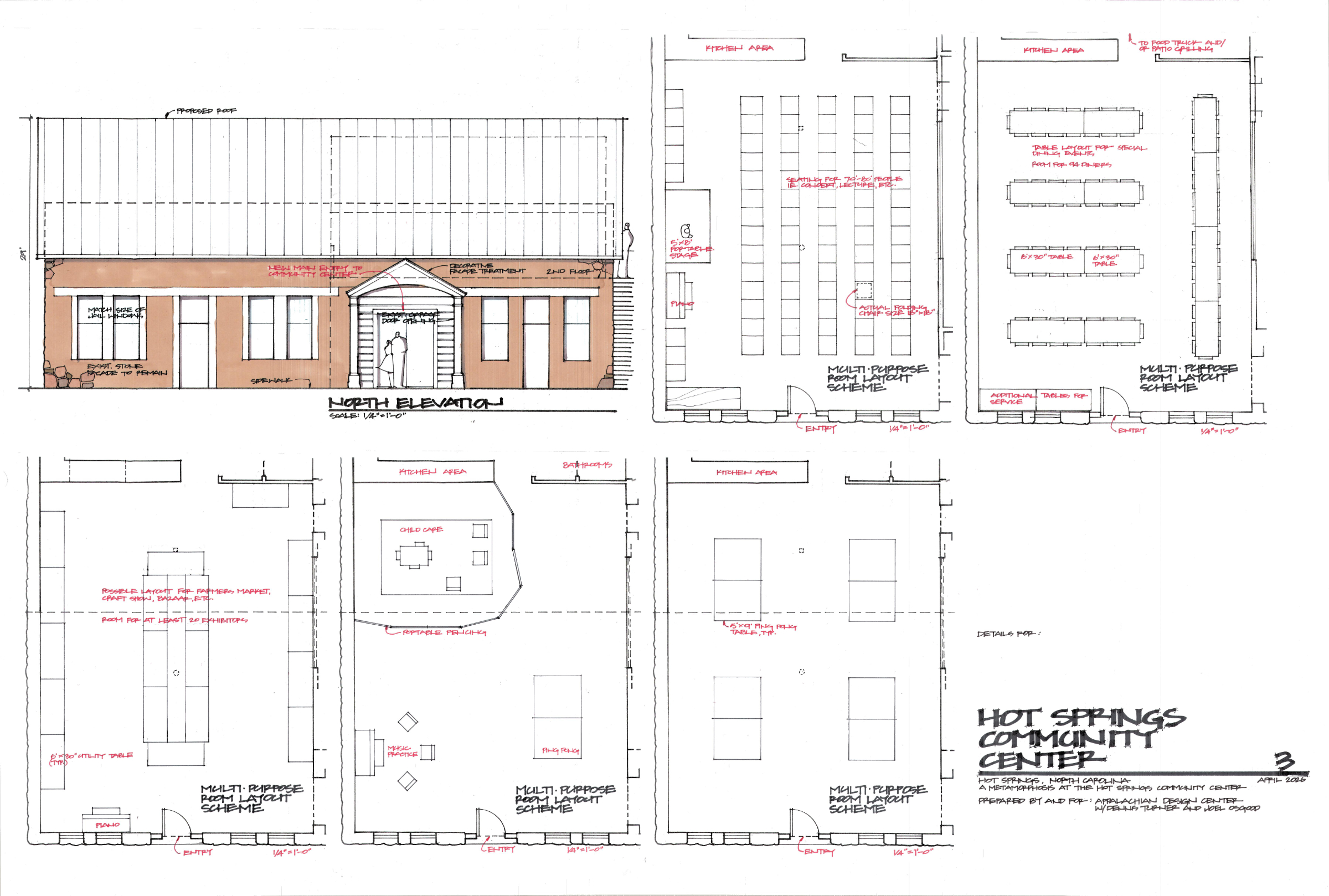
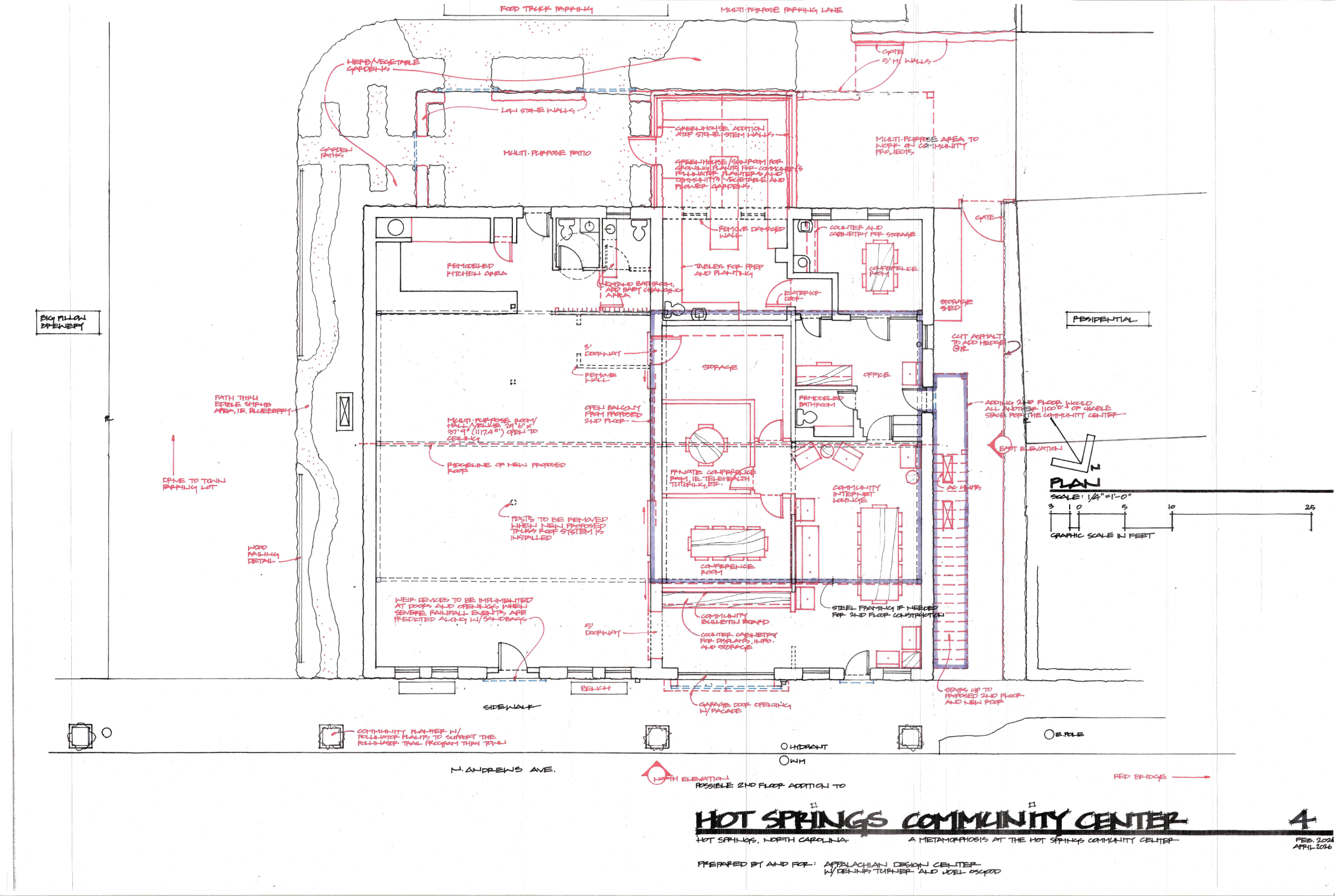
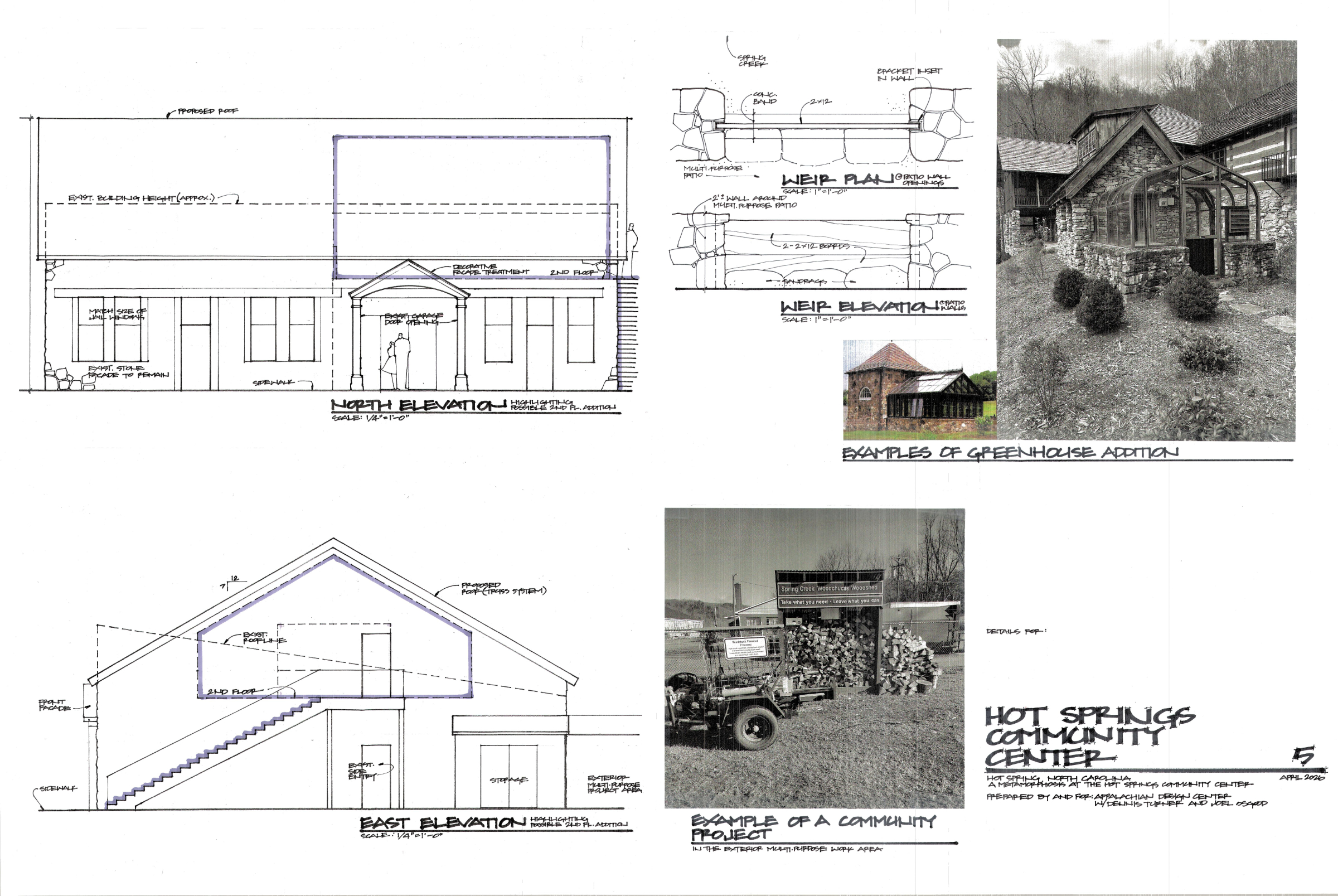
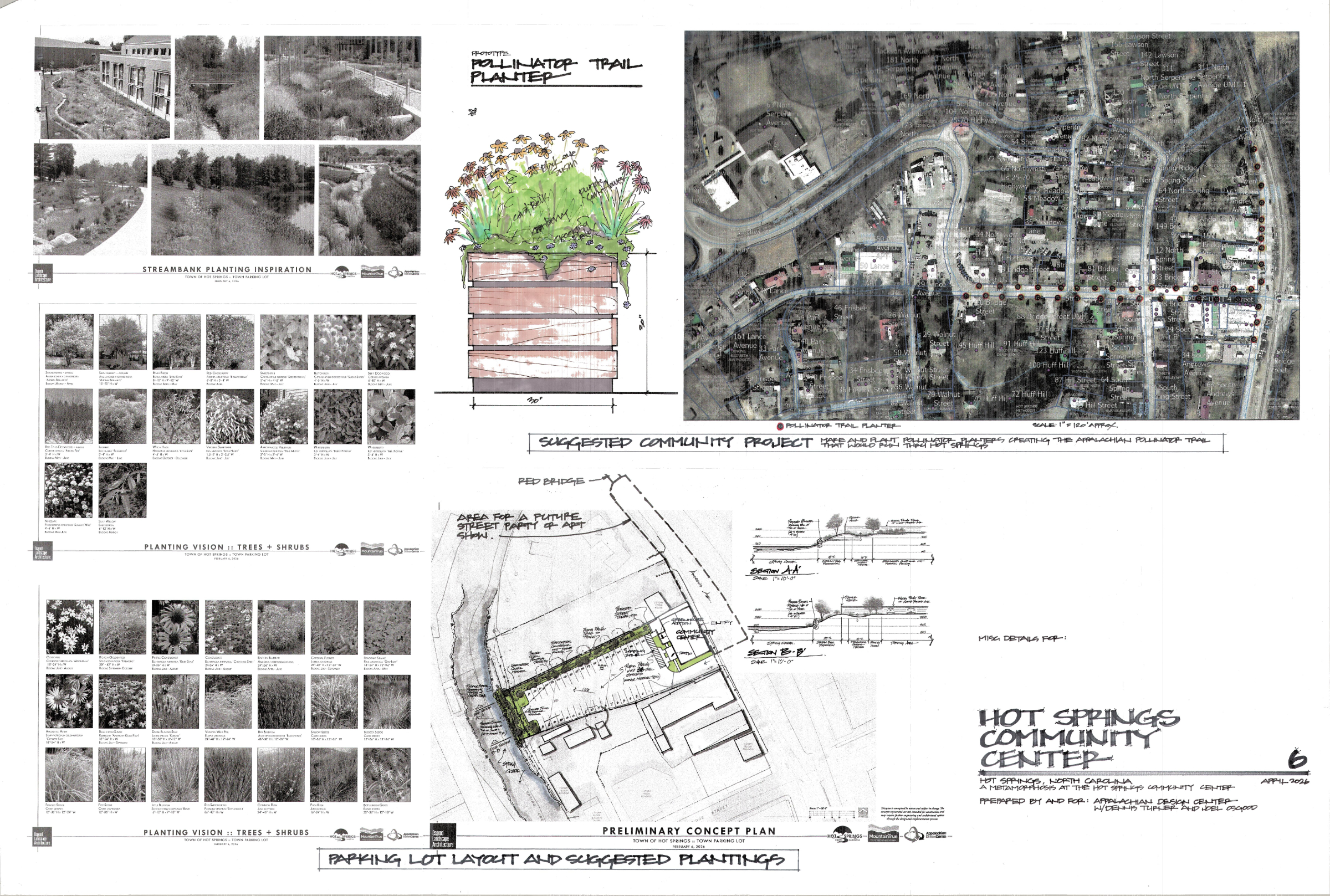
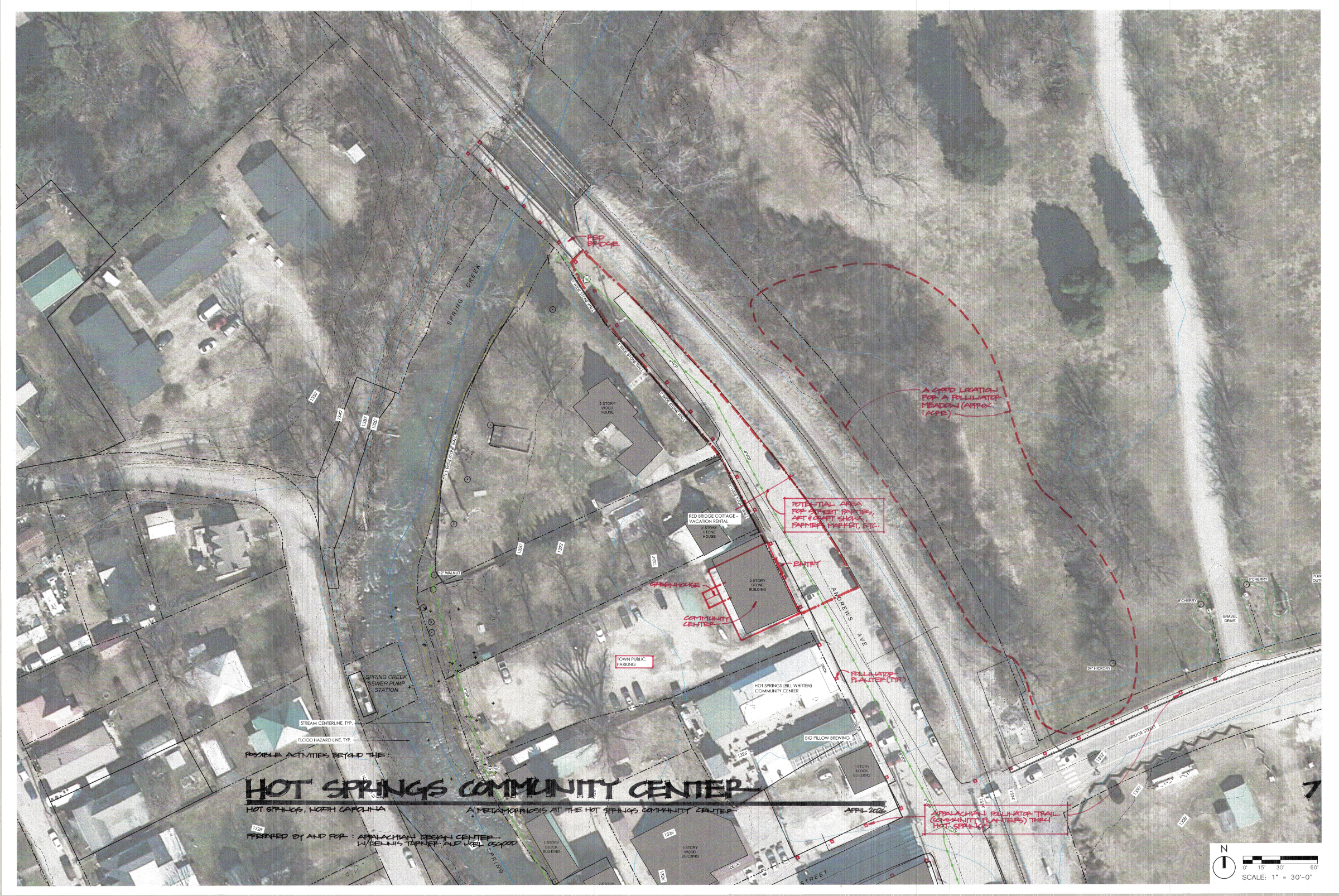
Dennis Turner, a Madison County landscape architect, came at it from the opposite direction — keep the building, work within it, and surround it with community-driven programming that extends well beyond four walls.
Rather than raising the floor to meet flood elevation requirements, Dennis proposed a system of weirs: low seat walls around the building’s perimeter with slotted openings that accept removable boards to hold back floodwater when needed. It’s a low-tech, time-tested solution — he’s seen versions of it work in California irrigation projects and in his own childhood home. Whether this approach would satisfy state flood regulations for a renovated public building is a question that would need a formal code review, but it’s a creative approach worth exploring.
Inside, the concept opens up the main space by removing columns and raising the ceiling height — creating room for the yoga classes, martial arts, and movement programming the community asked for. The layout includes a co-working and internet lounge area (aimed at hikers, students, and remote workers), private meeting and telehealth rooms, an expanded kitchen, and four bathrooms including ADA-compliant facilities. A barn door separates the main hall from the more private side, keeping the space flexible.
The most distinctive element of Dennis’s design is what happens outside. A greenhouse structure extends off the back of the building, growing plants for the community and supplying a proposed “Appalachian Pollinator Trail” — planters running down Main Street filled with native pollinator plants, maintained by garden clubs and youth groups. There’s also a patio designed for community activities: a firewood-sharing area, sandbag staging in emergencies, space for food trucks. The back of the building connects directly to the planned parking lot and Spring Creek beyond.
Dennis also proposed the option of an interior steel structure that could support a second floor above the existing stone walls — adding roughly 1,000 square feet of rentable or programmable space without altering the building’s exterior character.
Concept 3: Historic Restoration with Raised Floor and Flexible Interior
Presented by Erin Marceno, Legerton Architecture
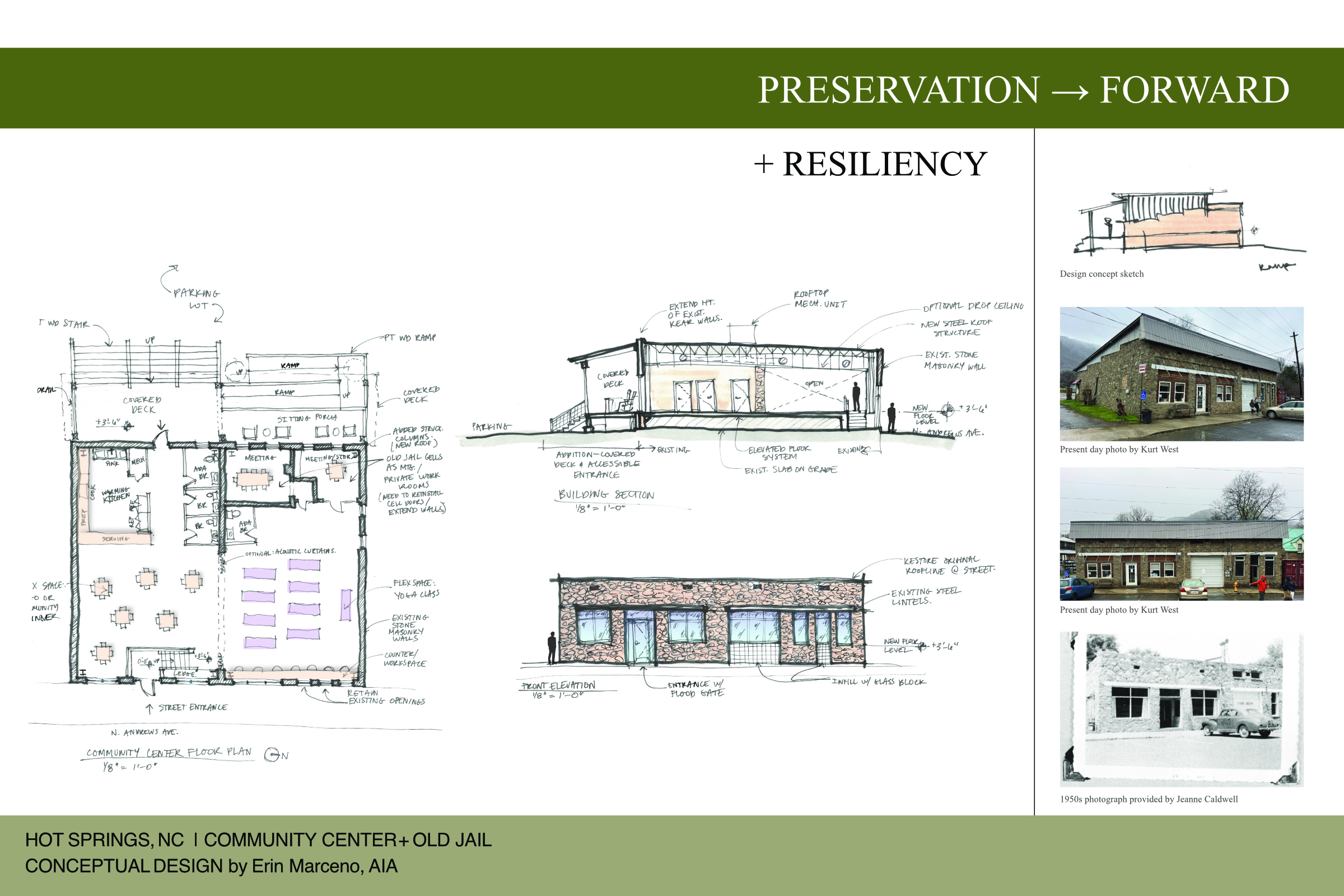
Erin Marceno, an architect from Legerton Architecture in Asheville with a background in historic preservation, brought a design rooted in the building’s own past. She arrived with a photograph of the Community Center from the 1950s — back when it may have been a furniture store on one side and a fire station on the other — showing what the original building looked like before the current roof was added and the original window openings were altered.
Her concept: remove the later-added roof (which has its own structural issues), restore the original parapet wall form, and build a new interior steel structure inside the historic stone shell. That new interior structure raises the floor to meet flood elevation requirements — up to 3 feet above current grade — while also lifting the ceiling height for the kind of open, high-volume space the community wants.
Flood access at the front entrance would be managed with a slotted floodgate system — a significant step up from sandbags, and far more aesthetically integrated into the building.
The design opens the Community Center and Old Jail into a single connected space, with a large flexible main floor serving yoga, events, markets, and community gatherings. The old jail cells become private meeting rooms available for rent. An L-shaped kitchen counter runs along the back, designed for food service at events. Bathrooms are added toward the rear, with ADA compliance addressed through a covered exterior ramp off the back parking lot — which would also serve as a second entry point for visitors parking behind the building.
Erin noted clearly: this is likely the most expensive of the four concepts, given the scope of structural work involved. But it’s also the one that most fully preserves what the building looks like from the outside while transforming what it can do on the inside.
Concept 4: A Flexible Civic Campus
Presented on behalf of Kurt West, West Workshop (Raleigh/D.C.) — note: Kurt was not present at the session; his concept was presented by ADC facilitator Julie Judkins
Kurt West, founder of West Workshop and an architect specializing in adaptive reuse, submitted a concept that zoomed out the furthest — thinking about the whole site, not just the building, and about long-term financial sustainability for the town.
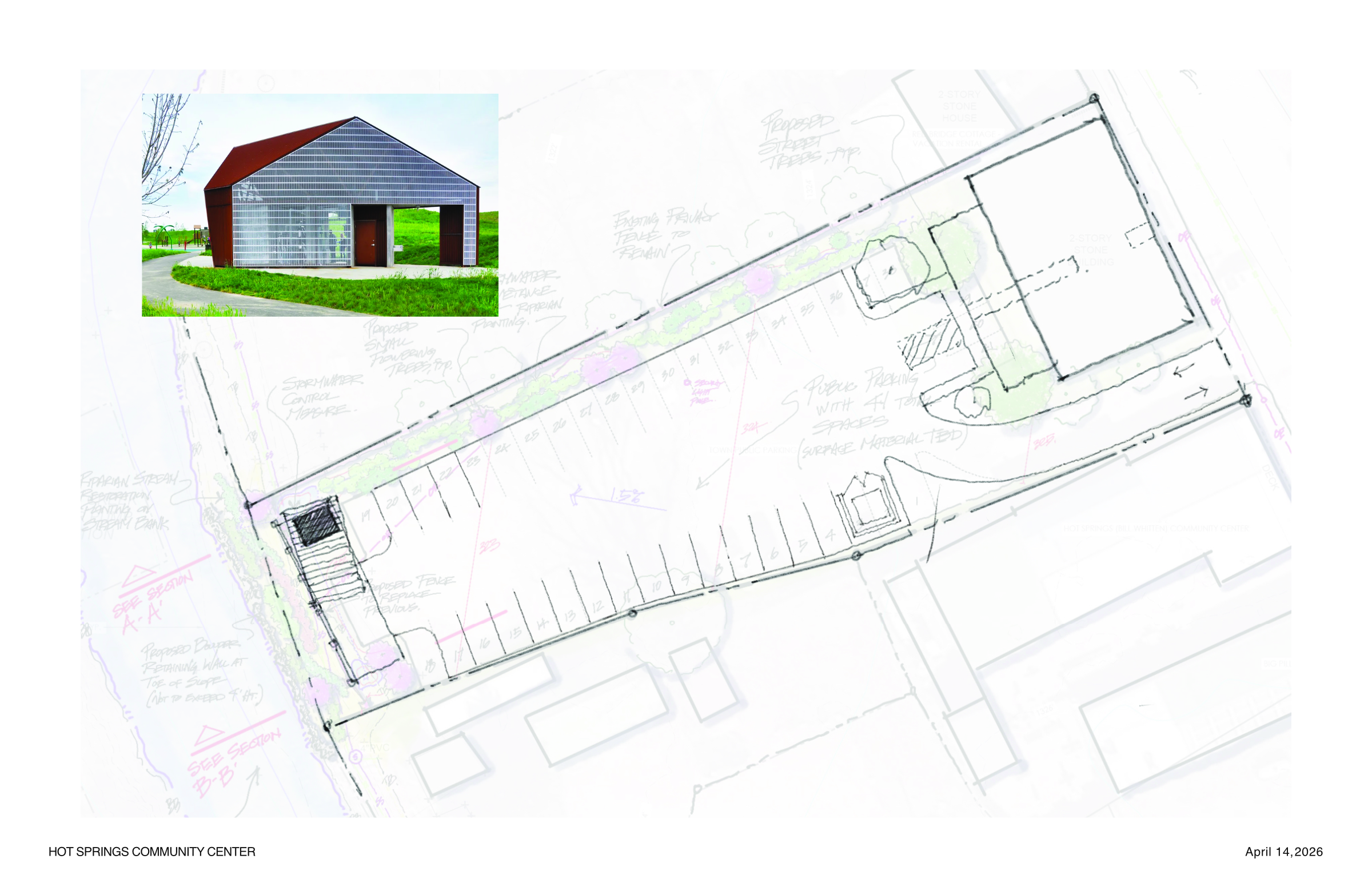
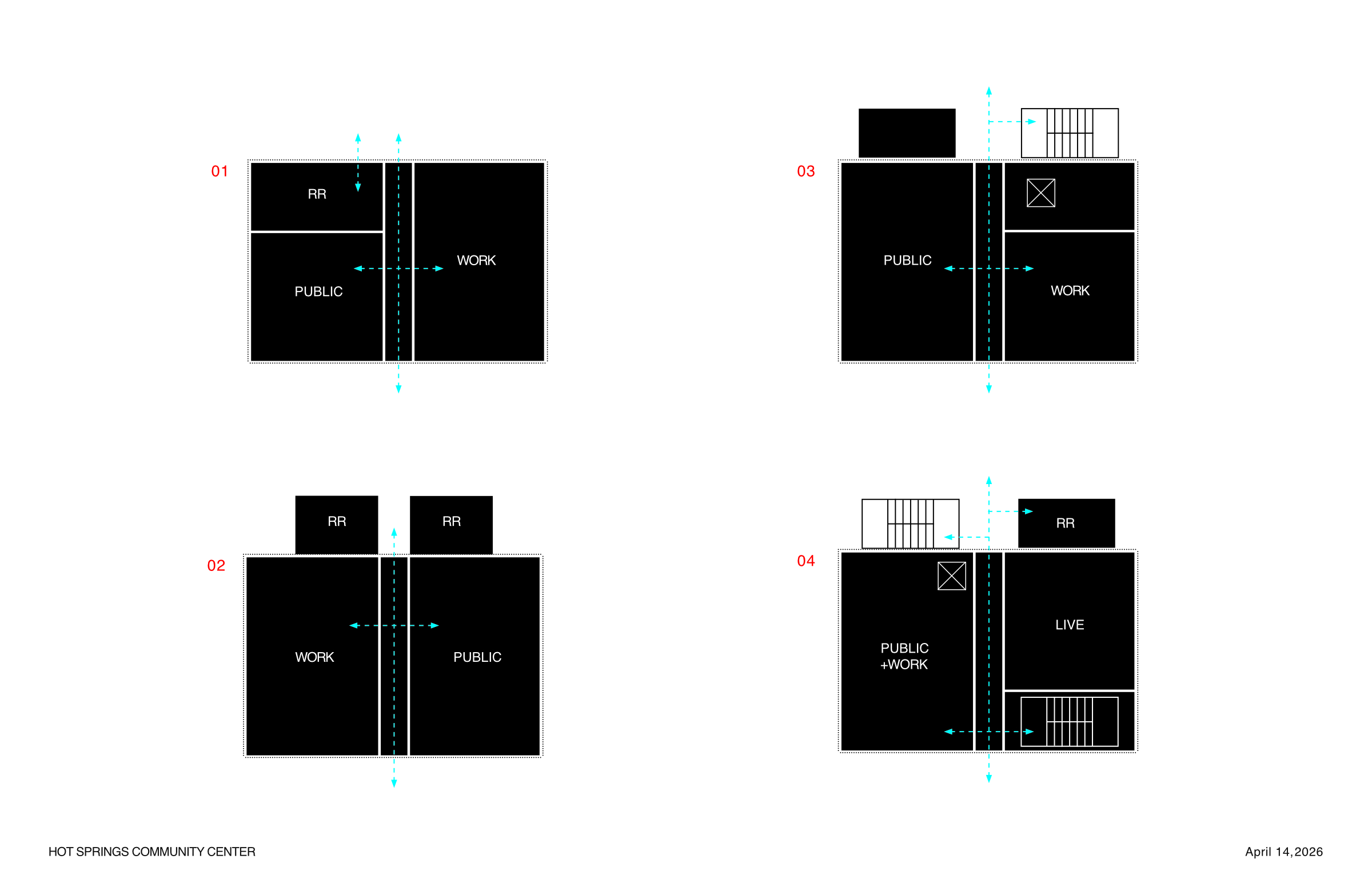
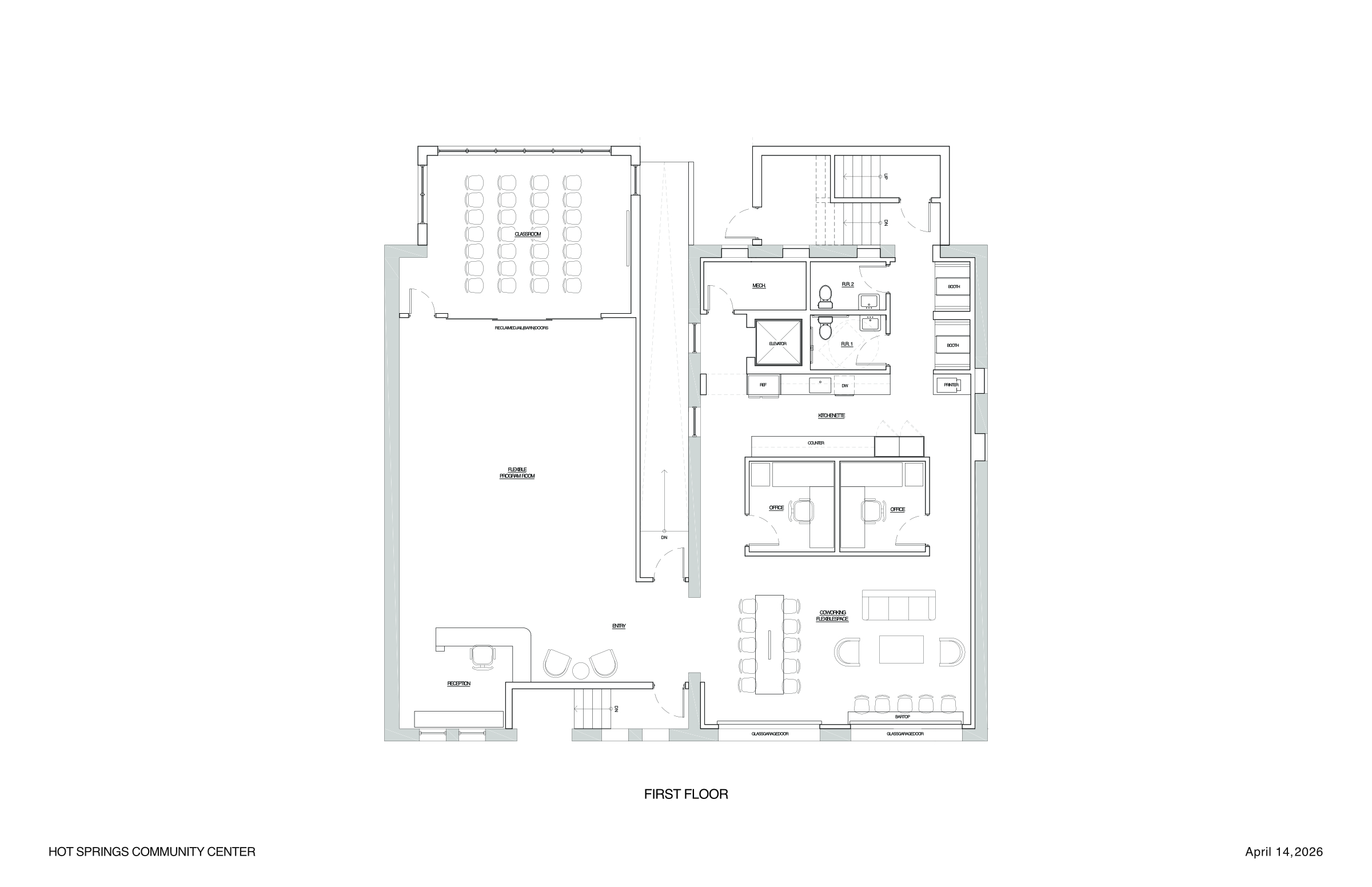
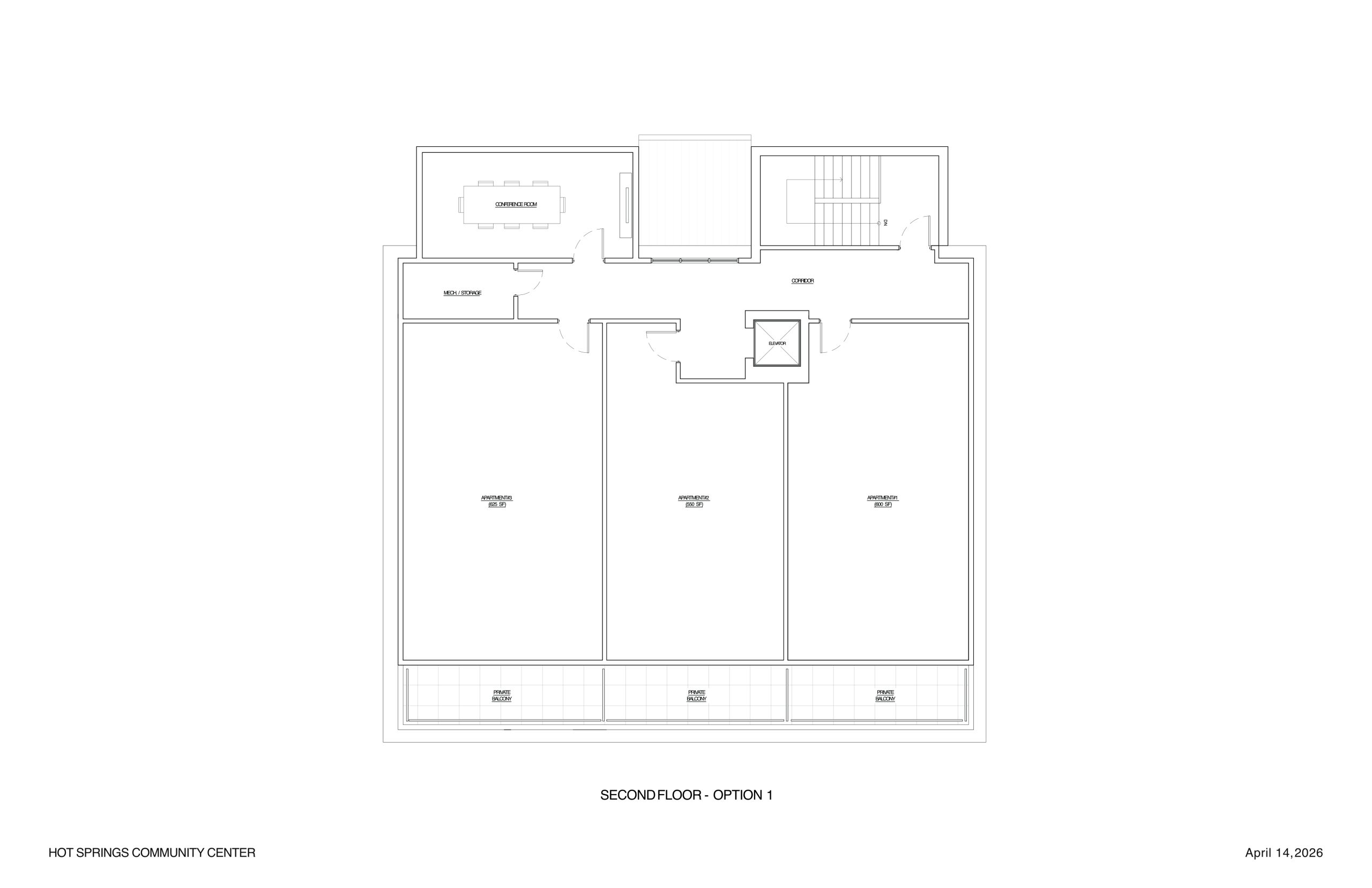
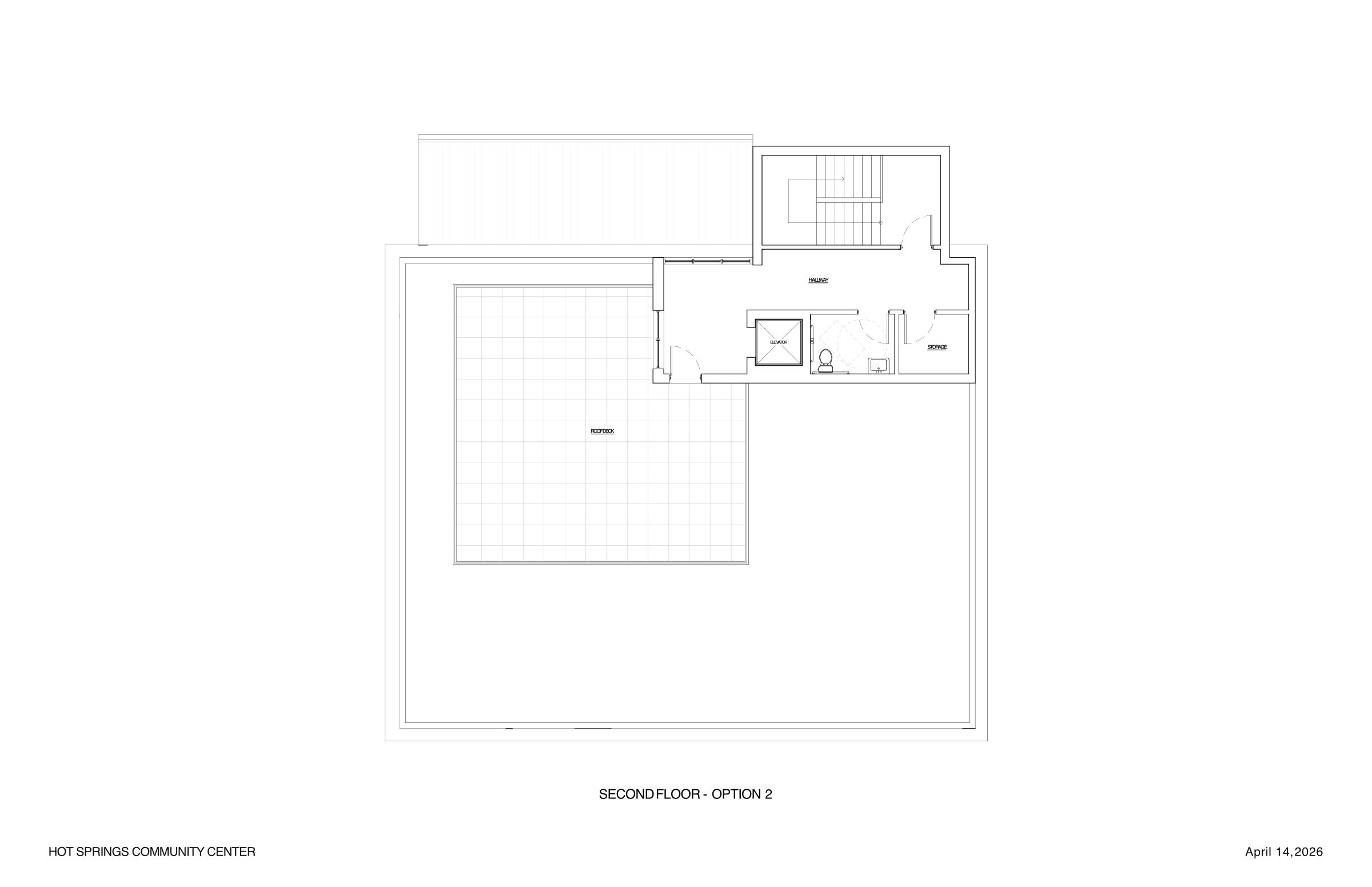
His design raises the floor 30 inches (rather than 36), which allows for a single ADA ramp run without a switchback — a practical move that simplifies accessibility while still meeting resilience targets. The ramp runs through the center of the two buildings, creating a kind of civic spine that anchors the whole project.
The first floor focuses on co-working: semi-private glass studio boxes, mini booths for private calls, a kitchenette that doubles as event support, and flexible overlap between workspace and community programming. The design uses crawl space construction with drainage holes in the walls and utilities suspended overhead — keeping the conditioned space limited and reducing long-term operating costs.
The second floor addresses something the community has discussed but no design has tackled head-on: housing. Kurt proposed using the upper level for residential units or short-term rentals, generating ongoing revenue for the town while potentially serving a deeper social purpose for people who need it.
Out back, a separate restroom structure is positioned closer to Spring Creek — designed intentionally to flood and drain without damaging the main building. It would also serve the parking area and any outdoor river-adjacent programming. Kurt referenced a resilient riverfront restroom along the Ohio River as a design precedent. An optional rooftop deck or green roof was also floated as an alternative to the second-floor housing concept.
What the Community Said
The discussion after the presentations was as useful as the designs themselves.
Several people were surprised to find themselves drawn to outdoor space — something that hadn’t been at the top of everyone’s list going in. Public restrooms accessible from outside came up as a practical economic development tool: visible, accessible facilities keep visitors in town longer. A community member’s recent trip to Burnsville, where a public bathhouse near downtown made a noticeable difference in how long people stayed, reinforced that point.
At the same time, a strong voice in the room pushed back on letting the outdoor enthusiasm overshadow the need for indoor space. If it’s raining and 30 degrees, people want somewhere to be inside. The community asked for yoga, classes, events, and programming that requires a real roof — and that should stay central to whatever gets designed.
Dennis’s design drew particular appreciation for the way it reflected the mutual aid ethic that defined Hot Springs’ response after Helene — the firewood-sharing area, the sandbag staging, the greenhouse for the community. It felt, to several people in the room, like someone who understood how this town actually works.
The idea of a hybrid emerged naturally: take the best elements from each concept and combine them. Maybe the pavilion form on the Old Jail side and a restored interior on the Community Center side. Maybe Dennis’s greenhouse and outdoor programming wrapped around Erin’s interior restoration. The designers themselves encouraged this kind of thinking — the final design will almost certainly be an amalgamation.
Grant funding came up, as it always does. The team was clear: let the community’s needs drive the design, then find the funding to match. The CDBG-DR block grant program currently open through the NC Department of Commerce allows for pre-screening meetings to test ideas before committing to a full application — and the Town of Hot Springs and RHSA have already been actively working that process. MountainTrue also noted it is building out in-house grant technical assistance capacity to help communities like Hot Springs navigate this without the burden falling entirely on local staff.
Wildfire resilience was raised as well — a metal roof, fire-resistant materials, and the natural firebreak provided by the creeks were all flagged as factors to keep in mind alongside flood planning.
What Comes Next
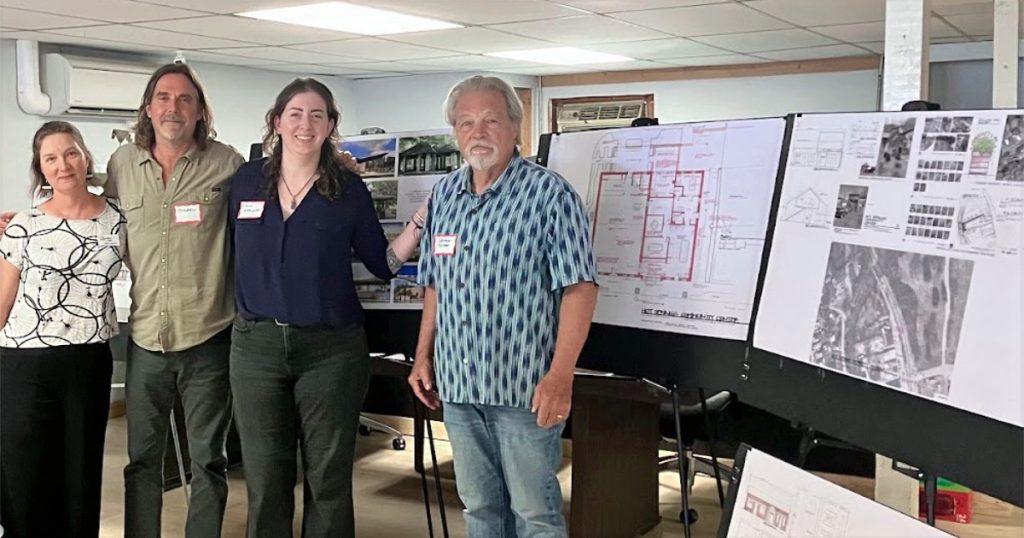
The design team will take all of the feedback from this session, combined with the community survey results, and work toward a single preferred design concept. A third public session — date to be announced — will present that refined concept and give the community another opportunity to weigh in before anything moves toward implementation.
No decisions have been made. This is still your process.
Haven’t filled out the survey yet? Now is the time. Your input shapes what this building becomes.
The third community session is coming — stay tuned for the date and details.
This project is a partnership between the Town of Hot Springs, Rebuild Hot Springs Area, and MountainTrue’s Appalachian Design Center.